NELDC Talented & Gifted Program · Ages 5–17
Some children learn faster when you let them move.
Gifted testing & enrichment · Boston, Massachusetts
We identify gifted learners with full IQ evaluation, then hand families math lessons built around throwing, jumping and playing — because the energy that gets a bright child corrected in a classroom is the same energy that helps them learn.
Do you think your child might be gifted?
The traits that get a child praised — and the ones that get them in trouble.
Gifted children tend to reason well, learn rapidly and remember almost everything. They are also often intense, perfectionistic, morally sensitive and inclined to question authority. Tap the ones that sound like your child.
Identification
Testing that selective programs actually accept.
We evaluate with the recognized Wechsler scales — the same measures used for admission to highly selective organizations including MENSA and the Davidson Institute.
WPPSI–IV
Wechsler Preschool and Primary Scale of Intelligence, Fourth Edition. For early identification, before a child has had much formal schooling.
WISC–V
Wechsler Intelligence Scale for Children, Fifth Edition. The workhorse measure for school-age identification and for program admissions.
WAIS–5
Wechsler Adult Intelligence Scale, Fifth Edition. For older students and adults seeking identification or membership testing.
The threshold
To qualify for the NELDC Talented and Gifted Program we typically look for a full-scale IQ of 130 or above — roughly the top two percent of the distribution.
The exception that matters
We also follow Howard Gardner's theory of multiple intelligences. Exceptional talent in science, mathematics or the arts can qualify a child whether or not a single composite score reaches 130.
Why families come to us
Mensa and Davidson decide who gets in. Somebody has to do the testing.
High-IQ and gifted organizations review documentation — they do not evaluate children. Both accept prior evidence from a licensed psychologist, and that evaluation is the part we do.
A report built to be submitted, not just read.
A prior-evidence application needs the full name and edition of the test, the date of testing, the score and percentile rank, on clinic letterhead, signed by a licensed psychologist with a license number — and administered under supervision. Unsupervised and online scores are rejected. Every NELDC evaluation produces exactly that record, because that is simply what a proper psychoeducational report contains.
Testing that fits the child's age
WPPSI-IV, WISC-V or WAIS-5, chosen by age and administered one-to-one. A group screener given to a whole grade on one morning tells you where a child sat that day. An individual evaluation tells you how they think.
Identification is where we start
A qualifying score is a beginning. Ours comes with movement-based math lesson plans, a homeschool program for ages 5–17, and a library of free browser apps — no membership fee, no accounts, nothing to install.
We look for what else is there
Gifted children are also dyslexic, autistic, or have ADHD — and get missed, because each side of the profile hides the other. We assess cognition, achievement, language, attention and emotional functioning in one evaluation, so nothing needs a second appointment elsewhere.
The evaluator can come to the meeting
If school services are part of the picture, the same practice handles IEP and 504 advocacy and independent educational evaluations. The person who tested your child can explain the findings to the team that has to act on them.
Non-profit, and parents ourselves
NELDC was founded by a group of parents with very bright children, and is a private non-profit. The gifted program is run by two people raising gifted children of their own. Assessment is available in English, Spanish and Mandarin Chinese.
Our method
Instead of correcting the energy, we build the lesson around it.
Physical activity before or during learning has a measurable effect on cognition and memory. Gifted children frequently arrive with more energy than a desk can absorb — so our lessons ask them to throw, jump, race and climb while they work through advanced math concepts.
Move
The lesson opens with the body: a bean bag, a basketball, a staircase, a relay. The math is embedded in the movement rather than bolted onto the end of it.
Learn
Advanced concepts — fractions, place value, geometry, speed drills — get attached to something the child physically did, which is what makes them stick.
Settle
After an exercise-filled lesson and a drink of water, most children sit far more readily for reading and writing. Blend the two and the day holds together.
Where the idea comes from
The psychiatrist Kazimierz Dabrowski described five kinds of overexcitability in gifted people. The psychomotor type — a surplus of energy showing up as love of movement, rapid speech, impulsiveness and restlessness — is the basis of this program. A traditional classroom treats that trait as a behavior problem. We treat it as the delivery mechanism.
The math library
Nine math apps to learn math.
Every one of these is free, runs in the browser, and asks for no account and no sign-up. Gifted learners can move through them at their own pace rather than the class's — start higher than the age band suggests and let the app settle to the right level. They sit alongside the movement lessons and the rest of the Learning Resource Center.
Sample lesson · Throwing Fractions
Throw the bean bag. Walk the answer.
Your child throws a bean bag up a staircase, or over markers labelled 1–12 laid out on the floor. Wherever it lands, they count the step — then say and walk a half, a quarter and a third of that number. Pick a landing step to see the lesson run.
Choose a step to see the answers your child works out on their feet.
Basketball Math. The child shoots at a child-height hoop. Every basket made earns a pull from the math grab bag — answer the question correctly and the basket counts for points. Missed shots cost nothing but the next question is still waiting. Sample lesson · NELDC Talented & Gifted Program
Homeschool program
Built for the setting where a child is allowed to be loud.
A physically active lesson does not fit a traditional classroom, which is exactly why this program lives at home. It is designed to complement — not replace — the homeschool curriculum your state requires.
Starting the paperwork
- Request a homeschool application from your public school district.
- Provide everything the district asks for, in writing.
- Expect either an approval letter or a request for more information.
- The Home School Legal Defense Association (HSLDA) publishes state-by-state requirements.
Building the week
- Open with a movement lesson while energy is highest.
- Water break — then the sitting subjects: reading, writing, composition.
- Rotate the nine lessons rather than repeating a favourite into the ground.
- Adapt the movement pattern to other subjects once the rhythm is familiar.
A note for parents: this approach asks the teaching parent to be active and energetic too. Most families find that a feature rather than a cost.
Differential diagnosis
Gifted and energetic is not the same as ADHD.
Bright, high-energy children are sometimes misidentified as having ADHD, and occasionally as having bipolar disorder. The most useful thing a parent can watch is attention span on something the child genuinely cares about.
An energetic gifted child
Can hold attention for long stretches — commonly 30 to 60 minutes — and will absorb advanced concepts while physically active. The energy runs alongside the focus rather than interrupting it.
A child with ADHD
Typically needs much shorter bursts — closer to 15 minutes — and considerable redirection to get through them successfully.
Who runs this program
Two parents of gifted children who do this professionally.
James Paicopolos
Licensed School Psychologist · Learning Disabilities Specialist · Director, NELDC
More than 25 years of practice. Completed his School Psychology program at the University of Massachusetts and holds a master's in Special Education and Teaching from Bridgewater State University. Licensed in Massachusetts in School Psychology and Special Education, and a founder of the Center.
Nicole S. Bourgeois, MSW
Clinical Social Worker · Co-author, TAG Homeschool Program
Co-developed the Talented and Gifted homeschool lesson plans with Jim. Like him, she is a parent of a gifted child — the program grew out of what the two of them needed and could not find.
The New England Diagnostic & Learning Center is a private non-profit organization, founded by a group of parents with very bright children. We provide IQ testing and educational services, and work with parents to develop homeschool lesson plans for talented and gifted students.
NELDC School Resource Library
Twenty-two apps. No accounts, no subscriptions, no sign-ups.
Every tool below is built by NELDC and free to use. They run in the browser — best in Chrome — and work locally on your own computer or phone. Nothing to install, nothing collected.
Math
Problem solving and attention trained together. Gifted learners can move through grade levels at their own pace rather than the class's — start higher than the age band suggests and let the app settle to the right level.

Online Arithmetic
Interactive practice that adapts across grade levels, from early counting through middle-school computation.
Open app
Online Math Word Problems
Story-based problems that build reading comprehension and math reasoning at the same time — useful when a child computes fast but stalls on the wording.
Open app
Online Algebra
Guided practice from first equations through advanced topics. A common place to accelerate a gifted student well ahead of their grade placement.
Open app
Online Geometry
Visual, hands-on work with shapes, angles and spatial reasoning — pairs naturally with the Around the World of Shapes movement lesson.
Open app
Math Problem Practice (Badges)
Tracks mastery across problem sets and awards badges. Good for children who need a visible finish line rather than an open-ended worksheet.
Open app
Talented and Gifted Math
Enrichment problems written to challenge advanced learners — the printable companion to this program.
Download PDF
Math Made Easy
Brain-based practice book for building core math skills at home or in class.
Download PDFLanguage Arts
Reading, writing and creative expression, including tools built for students with dyslexia — which matters here, because a child can be gifted and dyslexic at once.

Blizzard Story Board — Word Processor & Art Pad
Born during the Blizzard of 2026: a browser-based writing space with an integrated drawing canvas, so a student can answer a prompt in pictures as readily as in sentences.
- Structured, distraction-light layouts keep the focus on ideas
- Canvas and image tools give visual learners another way in
- Specialists can adapt materials quickly for an individual plan
Sound Step Reading
Structured, sound-based decoding and phonics practice, sequenced the way the brain acquires the skill.
Open app
Advanced Sound Step Reading
The next level of sound-based support, for readers who have the basics and need harder material to stay interested.
Open app
Dino Dig
Excavate fossils and read about prehistoric life — decoding practice wrapped in a subject bright children rarely need persuading about.
Open app
Storm Tracks
Weather patterns and storm systems, read and explored together. Reading practice with real climate science underneath it.
Open app
Feather Rock
Identify rocks, minerals and bird species while reading. Built for the collector-minded child who wants the real names for things.
Open appPDF Forge
Fill in, edit and manage PDF forms straight in the browser — handy for the school paperwork that comes with all of this.
Open tool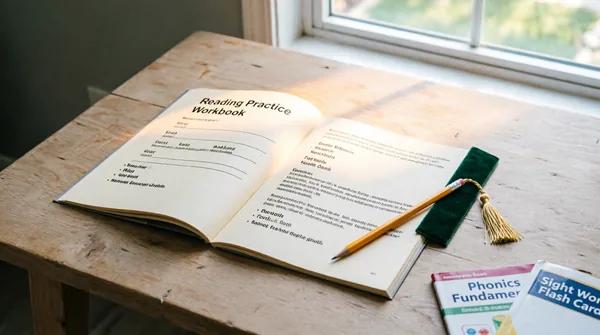
Reading Made Easy — Book 2
Printable practice for fluency and comprehension, following the brain-based reading sequence.
Download PDFMusic and Art
Instruments and creative tools designed to remove the physical and sensory barriers that usually stand between a child and an instrument. Useful for focus, sensory regulation and the plain pleasure of making something.
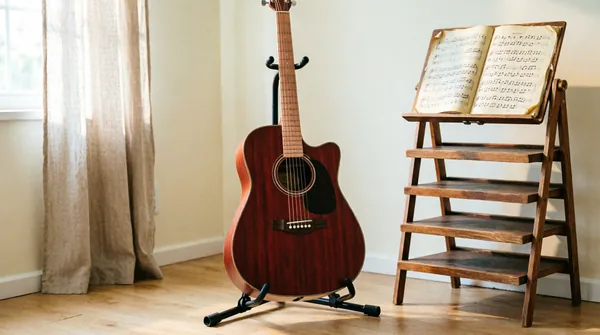
StringCraft — Guitar Synthesizer
A guitar for people who learn differently. Pick strings with mouse or touch, drag to strum, or play from the keyboard when fine motor control is the obstacle.
- Spacebar, arrow and number-key shortcuts for fast play
- Five rhythmic patterns including folk and Travis fingerpicking — no advanced dexterity needed
- Autism-friendly sound: tempo 60–200 BPM, sustain 0.5–4 seconds, and a brightness filter for a warmer, less abrasive tone
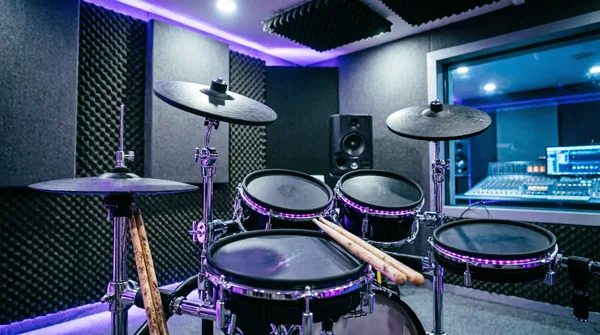
BeatLab — Genre Library
Build beats and take rhythm apart across genres, in a drum machine that doesn't require drumming.
Open appTrack Foundry
Layer loops and sounds into a finished track in the browser — composition without a studio.
Open appSynth Keyboard
A playable synthesizer for exploring melody and sound, with no instrument to buy or tune.
Open appViolin
An accessible virtual violin for notes, bowing and simple melodies.
Open app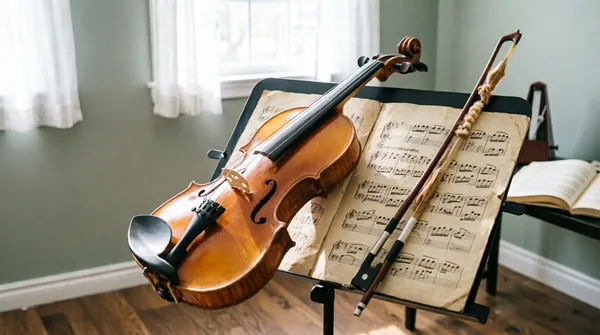
Violin — Advanced Practice
More pieces and more practice modes, for a student who has outgrown the first violin app.
Open app
Imagine Ink
A drawing and illustration space for visual storytelling — pairs with Blizzard for children who think in pictures first.
Open appMore from NELDC
Assessment and family support beyond the apps.
Child Development Scale
Intellectual, developmental, visual-perceptual, language, social and emotional skills in one picture. No names or results are stored — download your own copy at the end.
Open the scalePsychoeducational Assessment
Full evaluation services, including the gifted testing described above.
OpenNeuroplasticity
The research behind the movement method: aerobic activity plus math problem solving to build attention and executive function.
OpenReferral Portal
Student referral, developmental history and release of information forms in one place.
Open the portalCommon questions
What parents ask before they call.
What IQ score is considered gifted?
Most gifted programs use a full-scale IQ of 130 or above — roughly the top two percent of the population — and that is the threshold we typically look for. We also follow Howard Gardner's theory of multiple intelligences, so exceptional talent in science, mathematics or the arts can qualify a child even when a single composite score does not reach 130.
Which tests do you use to identify a gifted child?
The Wechsler scales, matched to your child's age: the WPPSI-IV for preschool and early primary children, the WISC-V for school-age children, and the WAIS-5 for older students and adults. Each is administered one-to-one by a licensed psychologist rather than given as a group screener.
Will my child's scores qualify for Mensa or the Davidson Institute?
Those organizations set their own thresholds and review every application themselves, so no evaluator can promise admission — be wary of anyone who does.
What we can do is produce the documentation their prior-evidence route requires: an individually administered, supervised Wechsler evaluation, reported on clinic letterhead, naming the test and edition, the date of testing, the score and the percentile rank, signed by a licensed psychologist with a license number. Unsupervised and online tests are not accepted for these applications.
Can a child be gifted and have ADHD or dyslexia at the same time?
Yes — these children are described as twice-exceptional, and they are frequently missed, because high ability masks the disability and the disability masks the high ability. We evaluate for ADHD, dyslexia, autism and nonverbal learning disability alongside cognitive ability, so both sides of the profile appear in the same report.
How is private gifted testing different from the school's gifted screening?
School screening is usually a group test given to a whole grade on a single morning. An individually administered evaluation is given one-to-one by a psychologist who watches how your child works, not only what they score — and it produces a full written report that belongs to you and can be submitted elsewhere.
Do you work with homeschooling families?
Yes. The Talented and Gifted homeschool program serves children ages 5 to 17 and is built to complement the curriculum your state requires rather than replace it. It includes the movement-based math lesson plans and access to our free browser-based apps.
Do you offer testing in languages other than English?
Yes — bilingual assessment is available in Spanish and Mandarin Chinese.
What happens after the testing is finished?
A feedback meeting is scheduled to go through the report with you, and you are encouraged to raise questions or corrections there. You leave with the written report, and if your child qualifies, access to the program's lesson plans and resources. If school-based services are part of the picture, we can support IEP and 504 meetings as well.
Next step
Find out where your child actually is.
Testing answers the question a checklist can't. Send the form below, or call, to talk through whether an evaluation makes sense for your child, what it involves, and what you'll have at the end of it.
Call 508-717-4110Request an evaluation
Tell us about your child.
Everything here is what we'd ask on the phone anyway. Fill in what you know — if a field doesn't apply, leave it blank and we'll sort it out when we talk.
Thank you — that reached us.
We'll get back to you within two business days, usually sooner. If it's urgent, call 508-717-4110 and you'll reach someone directly.